






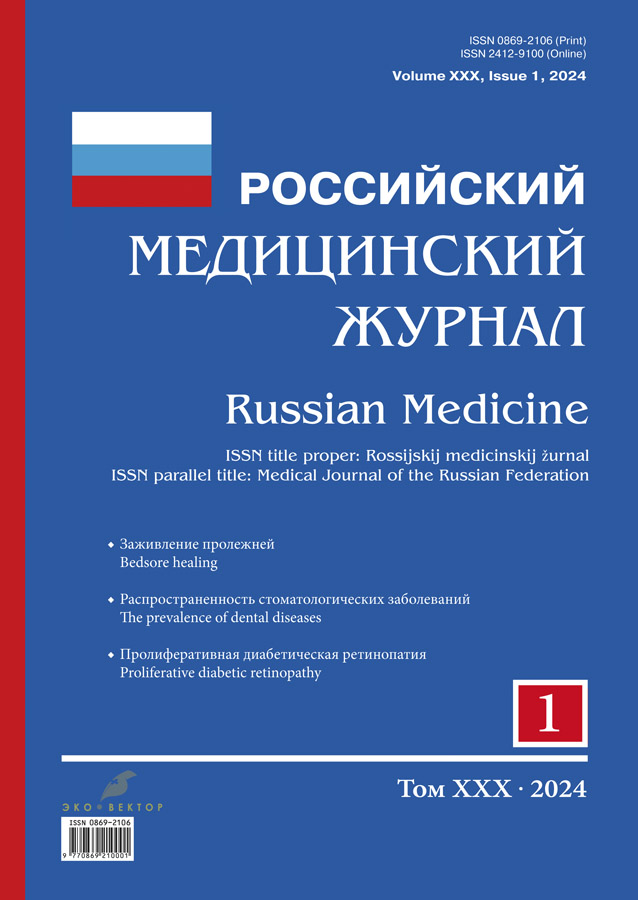
Russian Medicine
Peer-review bimonthly academic medical journal.
Editor-in-Chief
- Boris K. Romanov, MD, Dr. Sci. (Medicine), ORCID iD: 0000-0001-5429-9528
Publisher
- Eco-Vector Publishing Group
WEB: https://eco-vector.com/en/
About
The journal founded in 1937 is intended for physicians of all specialties, healthcare professionals, drug developers and regulators, researchers of scientific, medical and educational organizations. Being the central national place for medical data publications, the journal primarily covers the practical issues of diagnosis and treatment of diseases, as well as information on the most important and actual theoretical and practical aspects of health care and medical science.
Readers will find in this journal the most relevance and actual reviews, lectures and original study articles that have priority for Russian national healthcare system and deserve to be published.
Articles types
- reviews
- systematic reviews and metaanalyses
- original research
- clinical case reports and series
- letters to the editor
- short communications
- clinial practice guidelines
APC, Publication & Distribution
- Bimonthly issues (6 times a year)
- Continuoulsly publications online (Online First)
- Hybrid Access (Open Access articles published with CC BY-NC-ND 4.0 License)
- articles in English & Russian
- Article submission charge
Indexation
- Russian Science Citation Index (on WoS)
- CrossRef
- Google Scholar
- Ulrich’s International Periodicals Directory
- Dimensions
Current Issue
 Open Access
 Access granted
 Subscription or Fee Access
Vol 30, No 1 (2024)

Original Research Articles
Morphological aspects of bedsore healing against high-frequency electrical stimulation in patients with severe brain damage
Abstract
BACKGROUND: Bedsores or decubital ulcers are significant medical and social problems in patients with serious brain damage. The majority of local treatments are ineffective and do not ensure their healing. Therefore, the search for nondrug methods as part of the complex treatment of decubital ulcers is extremely relevant.
AIM: To assess the morphological picture of bedsores against the background of an improved method of treatment using high-frequency electrical stimulation with pulsed currents in chronically immobilised patients who survived a cerebral catastrophe.
MATERIALS AND METHODS: Biopsies of bedsores were examined in 12 patients with severe neurological disorders that developed after a cerebral catastrophe. The initial status of all patients was a ‘chronic critical condition’ (CCS). In all patients, the bedsore defect was located in the sacral region, with a length of 7–25 cm2. The depth of the bedsore corresponded to grade III according to the classification of the Agency for Health Care Policy and Research. Two groups of patients were formed: the main group of five patients (three men + two women), with an average age of 49.0 years, who were subjected to electrical stimulation with pulsed currents of the radiofrequency range. A control group of seven patients (three men + four women), with an average age of 60.1 years, who underwent traditional treatment. The duration of the chronic wound process ranged from 2 months to 1.5 years. The immediate cause of CCS was more often a massive ischaemic stroke (8), less often a severe traumatic brain injury (3) and radical operations to remove brain tumours (1) of various prescriptions from 3 months to 1.5 years. Morphological studies were conducted in both groups to assess the complicated wound process.
RESULTS: The complex morphological study revealed that in the presence of high-frequency electrical stimulation, an earlier appearance of foci of fibroblastic proliferation, an increase in the regenerative potential of tissues due to increased production of type I and III collagens, and myofibroblastic and endothelial growth factors were noted.
CONCLUSION: In the case of CCS of cerebral genesis, the wound process in bedsores inevitably becomes complicated and, according to morphological research, is characterised by severe endothelial dysfunction, deep microcirculation disorders, depletion of the potential of myofibroblastic cells and deficiency of their growth factors. Local high-frequency electrical stimulation in patients with severe brain damage and decubital ulcers as a component of complex ulcer therapy significantly optimises cellular and tissue reactions in the area of bedsores.
 7-14
7-14


Criteria-based assessment of analgesic activity of condensed 3-aminothieno[2,3-b]pyridines and 1,4-dihydropyridines derivatives based on dataexperimental studies
Abstract
BACKGROUND: An urgent task in pharmacology is to identify highly effective drugs with analgesic and anti-inflammatory activity. Heterocyclic cyanothioacetamide compounds are of considerable interest. Most authors evaluate the results of studies with separate private indicators of analgesic activity, and their comprehensive criterion assessment is insufficiently defined.
AIM: Development of a criterion assessment in the study of analgesic activity and the establishment of its generalized criteria for samples of chemical compounds of medicinal products.
MATERIALS AND METHODS: The experiments were performed on 390 male rats weighing 250–280 g in the laboratory of the Department of Fundamental and Clinical Pharmacology of St. Luke Lugansk State Medical University. Intact, control and reference (comparison group) groups of ten animals in each group were formed for each pharmacological test. In the intact group, the rats were unharmed. The control group received 2 mL of 0.9% sodium chloride solution intragastrically before each pharmacological test to establish analgesic activity. The reference group was injected with sodium metamizole at a dose of 7 mg/kg intragastrally once 1.5 h before modelling an acute pain reaction. Ten experimental groups were also formed, in which rats were injected with appropriate samples of new original studied derivatives of condensed 3-aminothieno[2,3-b]pyridines and 1,4-dihydropyridine intragastrically at a dose of 5 mg/kg 1.5 h before modelling acute pain syndrome. Tests for orofacial trigeminal pain, thermal immersion and hot plate were simulated. The indicators of the analgesic effect were the frequency of scratching movements in the orofacial trigeminal pain test and a statistically significant increase in the latent reaction period after the administration of the studied substances in the thermal immersion tests of the tail and hot plate.
RESULTS: The studied samples with ciphers AZ-023, AZ-331 and AZ-383 showed maximum analgesic activity. The proposed criterion of analgesic activity in the experimental groups receiving thienopyridine derivatives with the AZ-023 cipher, according to the results of three tests, was 50.1, exceeding the indicator in the comparison group by 42 times. The values of this criterion in the experimental groups that received new 1,4-dihydropyridine derivatives with laboratory ciphers AZ-331 and AZ-383 for preventive purposes were the maximum in this series of experiments (64.3 and 68.4), which is 53–57 times higher than that of sodium metamizole.
CONCLUSION: The methodology for assessing analgesic activity can be improved based on a criteria-based approach with the aggregation of particular indicators into an abstract model that allows quantifying the degree of analgesic activity. An integral criterion for the analgesic activity of cyanothioacetamide derivatives based on experimental data is proposed. In the future, the proposed approach can be used in studies of various analgesic samples.
15-26
The prevalence of dental diseases and medical and social characteristics in young people
Abstract
BACKGROUND: Despite ongoing treatment and prevention programmes, the prevalence of dental diseases remains high, particularly in young people. The prevalence of oral diseases is influenced by several socioeconomic factors, including age, place of residence, fluoride intake, individual oral care, diet and general somatic disease. The study of these factors is an urgent issue in dentistry.
AIM: To study the medical and social characteristics of young people and their effect on the prevalence of dental diseases.
METHODS: The oral cavities in 917 patients aged 18–44 years who had no history of dental treatment for at least 6 months were examined. The indices of DMF, Silness–LÖe, Green–Vermillion, PMA, CPITN, detection of noncarious lesions of teeth, malocclusion and diseases of the pulp, periapical tissues and periodontal were determined. To establish the influence of social and hygienic factors on the condition of the oral cavity, the survey responses of the study participants were analysed.
RESULTS: In young people, the rates of dental caries, diseases of the pulp and periapical tissues and inflammatory periodontal diseases were 94.2%, 47.4% and 86.8%, respectively. Among the medical and social factors determining the high prevalence of dental diseases, unsatisfactory hygienic condition of the oral cavity, visits to the dentist less than once a year and professional oral hygiene less than once a year should be noted.
CONCLUSION: The high prevalence of dental diseases in young people requires a differentiated approach to therapeutic and preventive measures, using medical and social factors.
27-36
Influence of medical and social factors on patients’ satisfaction at the center for reproduction and family planning with medical care
Abstract
BACKGROUND: The constant increase in the number of commercial medical organisations providing medical care using assisted reproductive technology (ART) and compulsory medical insurance funds necessitates the need to control the quality of medical services in this area. An important tool for this control is conducting sociological surveys of women undergoing infertility treatment using in vitro fertilisation (IVF) both in paid and free forms.
MATERIALS AND METHODS: Using a random sampling method, an anonymous survey was conducted on 398 patients of the Center for Reproduction and Family Planning in St. Petersburg, which provided medical care for infertility treatment using ART both at the expense of compulsory medical insurance and in paid form. The significance of differences in indicators was assessed using Student’s t-test for quantitative indicators. The significance of differences between qualitative characteristics was checked using contingency tables and Pearson’s chi-square test (χ2). Differences were considered significant at р <0.05.
RESULTS: Despite the high level of patient satisfaction with the provision of medical care using ART, 9.0% of women were partially or completely dissatisfied. Compulsory medical insurance funds were paid for infertility treatment using IVF for 12.1% of patients. The majority of patients paid for medical care themselves (87.9%), of which 13.1% of women believed that the cost of medical services in the center was excessive (χ2=29.08; р=0.000), and 10.9% thought that the cost does not correspond to the level of medical services provided (χ2=25.74; р=0.000). There was no significant influence of age (χ2=4.78; р=0.311), place of residence (χ2=1.79; р=0.409), presence of children (χ2=2.21; р=0.331), employment (χ2=2.91; р=0.233) and forms of payment for treatment (χ2=4.69; р=0.096) on the distribution of patients according to the degree of satisfaction with medical care. At the same time, it was determined that marital status (χ2=6.88; р=0.032) and income level (χ2=60.01; р=0.000) are factors that influence the degree of satisfaction of women with infertility treatment using ART.
CONCLUSION: Many medical and social factors have been identified to significantly affect satisfaction with medical care, such as the patient’s marital status and income level. Simultaneously, the economic form of payment for treatment did not have a significant effect on the degree of satisfaction.
37-47
Reviews
Diagnostic, prognostic and therapeutic aspects of apelin in cardiovascular diseases
Abstract
Biological markers have been thoroughly incorporated into clinical practice as a convenient and simple method for diagnosing and monitoring the condition of patients. The analysis of biomarkers has found its niche in oncology; however, their application in cardiovascular diseases is still in its infancy. Studies on apelin indicate the potential diagnostic and prognostic significance of the assessment of this marker in patients with cardiovascular diseases. The beneficial effect of apelin on the heart and blood vessels allows us to consider this marker as a therapeutic target. The combination of apelin with other biological markers, particularly brain natriuretic peptide and its precursor, may increase the predictive value of apelin.
48-66
Features of the course and treatment of bronchial asthma combined with arterial hypertension: a review
Abstract
Bronchial asthma (BA) is a serious medical and social problem. Many patients with asthma have various concomitant chronic diseases, among which the pathology of the cardiovascular system occupies an important place. Most often, asthma occurs with arterial hypertension (AH). This concurrence can lead to mutual aggravation and progression of these diseases and may negatively affect the prognosis. Usually, difficulties appear when choosing the most effective therapy for BA along with hypertension. This review aimed to analyse the available publications on the problem of the combination of BA and hypertension. A review of the literature presents the summary, examines data on prevalence and indicates risk factors for the development of hypertension among patients with asthma. The coexistence of these diseases is more typical in older people. The review includes questions regarding the pathophysiology of this comorbidity. The role of impaired gas exchange and hypoxia, endothelial dysfunction, participation of the nitric oxide system and obesity in the development of hypertension in combination with asthma are highlighted. The significance of impaired nonrespiratory lung function is shown, and the inflammation features in this comorbid pathology are indicated, as well as the contribution of numerous genes to the development of asthma along with hypertension. In the literature, 330 common genes have been identified that may be involved in the molecular mechanisms of asthma and hypertension. This study shows the effect of concomitant hypertension on the course, asthma control and quality of life of the patients. In addition, the article shows modern approaches to effective therapy with the main groups of drugs used to treat these diseases. To date, studies have demonstrated the prevalence of the combination of asthma and hypertension in the structure of comorbidity, mutual influence and aggravation of these pathologies. Coexistence of BA and hypertension increases the severity of clinical symptoms. This article shows the important aspects of the treatment of a combination of diseases. The need for a thorough assessment of the safety of pharmacological therapy for BA along with hypertension has been demonstrated.
67-76
Proliferative diabetic retinopathy in severe stages: modern approaches to diagnosis and treatment (systematic review)
Abstract
Diabetic retinopathy (DR) is a leading complication in patients with diabetes mellitus (DM). Because of the increase in the clinical effectiveness of treatment for diabetes, the life expectancy of patients has increased, which accordingly increases the risk of severe forms of DR (proliferative DR), which is one of the main causes of blindness and low vision in the working-age population. In the literature, the overall prevalence of DR and proliferative DR is up to 34.6% and 12.0%, respectively, whereas 25% of cases of vision loss associated with DR are caused by complications of proliferative DR. Colour fundus photography and optical coherence tomography are the most informative clinical diagnostic methods for DR. In severe stages of proliferative DR, the information content of the presented indicators can be significantly reduced because of insufficient visualisation of the patient’s fundus. Thus, the literature proposes qualitative criteria (specific and single indicators) based on an expert assessment of the condition of the fundus by an ophthalmic surgeon. The described approach has a fairly high diagnostic efficiency. Along with this, it appears relevant to study the ‘quality of life’ of a patient with symptoms of proliferative DR caused by the occurrence of characteristic manifestations of psychological distress (psychological and anxiety disorders and depression). In surgical terms, functional results notably improved after vitrectomy for proliferative DR in 49–83% of cases. Moreover, the proposed methods for conducting vitrectomy for patients with advanced stages of proliferative DR do not fully consider ophthalmological and somatic features, which requires the consideration of the surgical treatment of this contingent as a separate area of vitrectomy for improving ophthalmological ‘techniques’, drug support and choice of anaesthesia.
77-85
Case reports
Duodenal amyloidosis: a clinical case
Abstract
BACKGROUND: Amyloidosis is a chronic systemic disease that, in some cases, affects the organs of the gastrointestinal tract.
CLINICAL CASE DESCRIPTION: A 62-year-old patient complained of painless enlargement of the lymph nodes in the supraclavicular region on the left side according to the puncture biopsy of the lymph node — reactive lymphoid hyperplasia. During the examination, duodenal amyloidosis was accidentally detected. The results of additional studies to determine the type of amyloid were nonspecific. The patient refused to continue the examination.
CONCLUSION: This clinical case of duodenal amyloidosis is unusual and clearly demonstrates the difficulties of diagnosis, including the absence of a clinic and the nonspecificity of the endoscopic and radiological picture during the examination. In addition, the absence of an established chronic disease characteristic of amyloid A amyloidosis and the results of laboratory and instrumental research methods, excluding amyloid light chain amyloidosis and transthyretin amyloidosis, emphasise the main role of clinicians in diagnosing the underlying disease.
86-93

Регистрационный номер и дата принятия решения о регистрации СМИ: серия ПИ № ФС 77 - 86296 от 11.12.2023 г.
СМИ зарегистрировано Федеральной службой по надзору в сфере связи, информационных технологий и массовых коммуникаций (Роскомнадзор).
Регистрационный номер и дата принятия решения о регистрации СМИ: серия ЭЛ № ФС 77 - 80632 от 15.03.2021 г.